
Blanched vs. Natural Almonds: A B2B Buyer's Specification Guide
Understanding the functional differences between blanched and natural almonds helps procurement teams match the right product to every application — from bakery to beverage manufacturing.
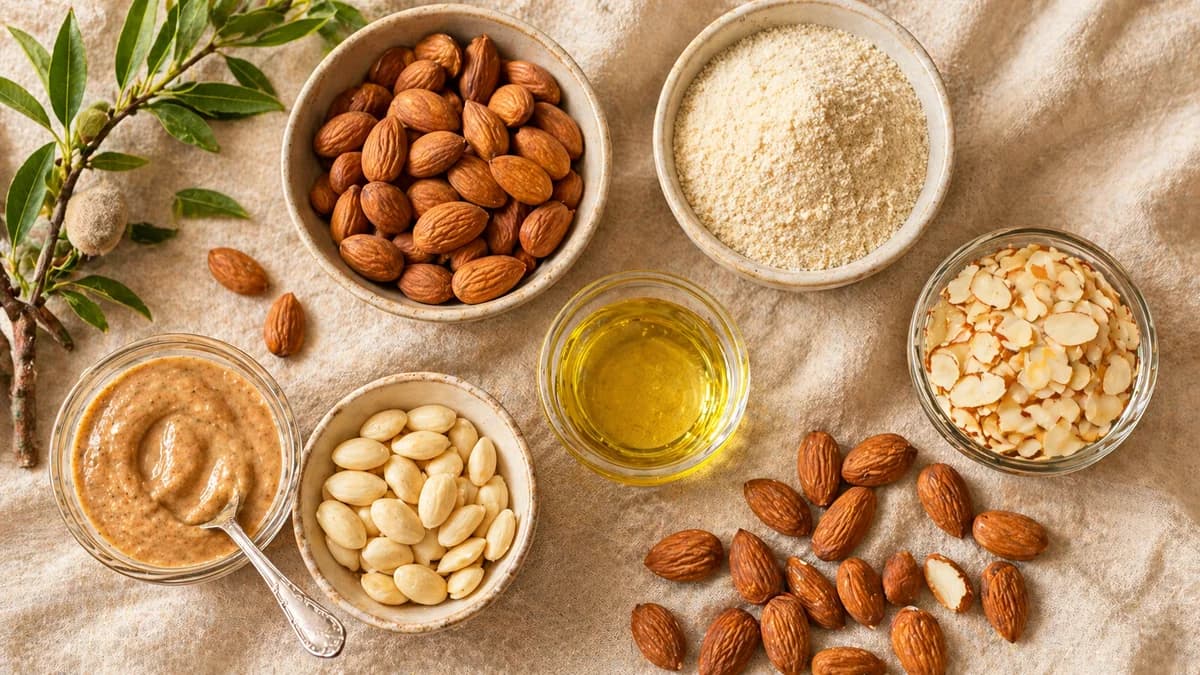
What Distinguishes Blanched from Natural Almonds
Natural almonds retain their brown seed coat, which contains tannins, fiber, and polyphenols. Blanched almonds have had this skin removed via hot-water immersion, yielding a smooth, ivory surface. For B2B buyers, this distinction drives decisions across flavor profile, texture, processing behavior, and regulatory labeling.
Flavor and Color Implications
The skin imparts a slightly bitter, astringent note that many applications prefer to avoid. Blanched almonds deliver a cleaner, creamier flavor ideal for marzipan, almond flour, and white confectionery coatings. Natural almonds excel in applications where visual texture and a fuller flavor — such as roasted snack lines and trail mix — are desirable.
Processing Behavior
Blanched almonds grind more uniformly into flour and paste, producing smoother textures in nut butters and fillings. Skin particles in natural almond flour create speckled appearance and coarser mouthfeel — acceptable in whole-grain or artisan positioning but problematic in premium white-label products.
Moisture and Fat Content
Blanching removes approximately 2-4% of the almond's weight as skin moisture and soluble compounds. This marginally concentrates fat content and reduces antioxidant capacity. Buyers sourcing for nutraceutical applications should verify CoA values for both formats before specification.
Available Calmond Valley Formats
Calmond Valley supplies natural whole, natural sliced, natural slivered, blanched whole, blanched sliced, blanched slivered, and blanched ground (flour). All formats are available in conventional and USDA Organic certified grades. Minimum order quantities and lead times vary by format — contact our trade desk for current availability.
Regulatory Labeling Note
In many markets, blanched almonds may still be declared as 'almonds' on ingredient lists without qualification. However, certain health claim regulations tie polyphenol or fiber content to the skin-on format. Procurement teams should verify labeling requirements with their regulatory counsel before switching formats mid-product lifecycle.